Harley Jones Jeet Kune Do

Huntington Beach, California

The Way of the Intercepting Fist

Simplicity, directness, efficiency, and personal freedom of expression.

The Approach

Absorb what is useful.
Discard what is unnecessary.

Jeet Kune Do is grounded in simplicity, adaptability, and honest self-expression. It emphasizes direct, explosive movement that responds fluidly to the ever-changing realities of combat.

In a real physical altercation, there is no script. Jeet Kune Do emphasizes what works in the moment, stripped of unnecessary motion, and executed with total intent. Jeet Kune Do is not a collection of techniques, but a cultivation of perception, timing, and truth.

Training in Jeet Kune Do develops:

  1. 01

    Structure

    Physical structure that supports speed, precision, and power.

  2. 02

    Timing & Interception

    A functional understanding of timing, distance, and interception.

  3. 03

    Adaptability

    The ability to adapt under pressure and respond without hesitation.

Instructor

Harley Jones

  • RankFull Instructor
  • Certified underVern Rochon
  • LineageBruce Lee · Jerry Poteet
  • Teaching since2011

I am a 3rd Generation Full Instructor in Jeet Kune Do, under the direct lineage of the late Jerry Poteet, an original student of Bruce Lee. I earned my instructor certification under Vern Rochon, the first Senior Instructor certified by the late Jerry Poteet, whose commitment to preserving the core of Bruce Lee's philosophy continues to guide my own practice and teaching. I have had the privilege of training under other Jeet Kune Do lineages as well, which have given me a broader perspective on the art.

I founded the Jeet Kune Do Academy of Martial Science in San Antonio, Texas, in 2011, where I taught both private and group instruction. After relocating to Southern California in 2015, I continued teaching while further refining my understanding of JKD's core principles and its adaptability to real-world application, while also exploring other martial arts to continue my growth as a martial artist.

Over the years, I've trained in and continue to train in a variety of other martial arts including Gracie Jiu-Jitsu, Ving Tsun (Ip Man and Wong Shun-Leung lineages), Muay Thai, and Tenshin Shōden Katori Shintō-ryū, with additional experience in Boxing, Submission Wrestling, MMA, Filipino Kali, Shito-ryu, Monadnock Defensive Tactics, Marine Corps Martial Arts Program (MCMAP), and American Karate. This diverse training has deepened my appreciation for the adaptability and directness at the heart of Jeet Kune Do.

The Lineage

A direct line to the source.

Jeet Kune Do is passed hand to hand. This is the line the training here comes from.

  1. Bruce Lee

    Founder of Jeet Kune Do. The art of expressing the human body in combat.

  2. Jerry Poteet

    An original student of Bruce Lee, entrusted to carry the art forward and known for teaching it whole.

  3. Vern Rochon

    Trained extensively under Jerry Poteet, keeping the method faithful and alive.

  4. Harley Jones

    Studied under Vern Rochon. Now teaching in Huntington Beach.

Roots

Bruce Lee

Bruce Lee left Hong Kong at the age of 18 and came to the United States, eventually settling in Seattle, Washington. While working in the restaurant of a family friend, he enrolled at the University of Washington where he studied philosophy. During this time, Lee began teaching Chinese gung fu and soon established his first school, the Jun Fan Gung Fu Institute. Two additional schools later followed in Oakland and Los Angeles.

As Lee continued teaching and researching martial arts, he began to question the limitations of rigid styles and fixed systems. Through extensive training, study, and real combat experience, he developed his own approach to martial arts, one that emphasized simplicity, directness, efficiency, and personal freedom of expression. This philosophy and method of combat would eventually be named Jeet Kune Do, meaning "The Way of the Intercepting Fist."

Bruce Lee's teachings encouraged practitioners to absorb what is useful, discard what is unnecessary, and ultimately express themselves honestly in combat. His ideas reshaped modern martial arts and laid the foundation for the art of Jeet Kune Do that continues to influence practitioners around the world.
Jerry Poteet

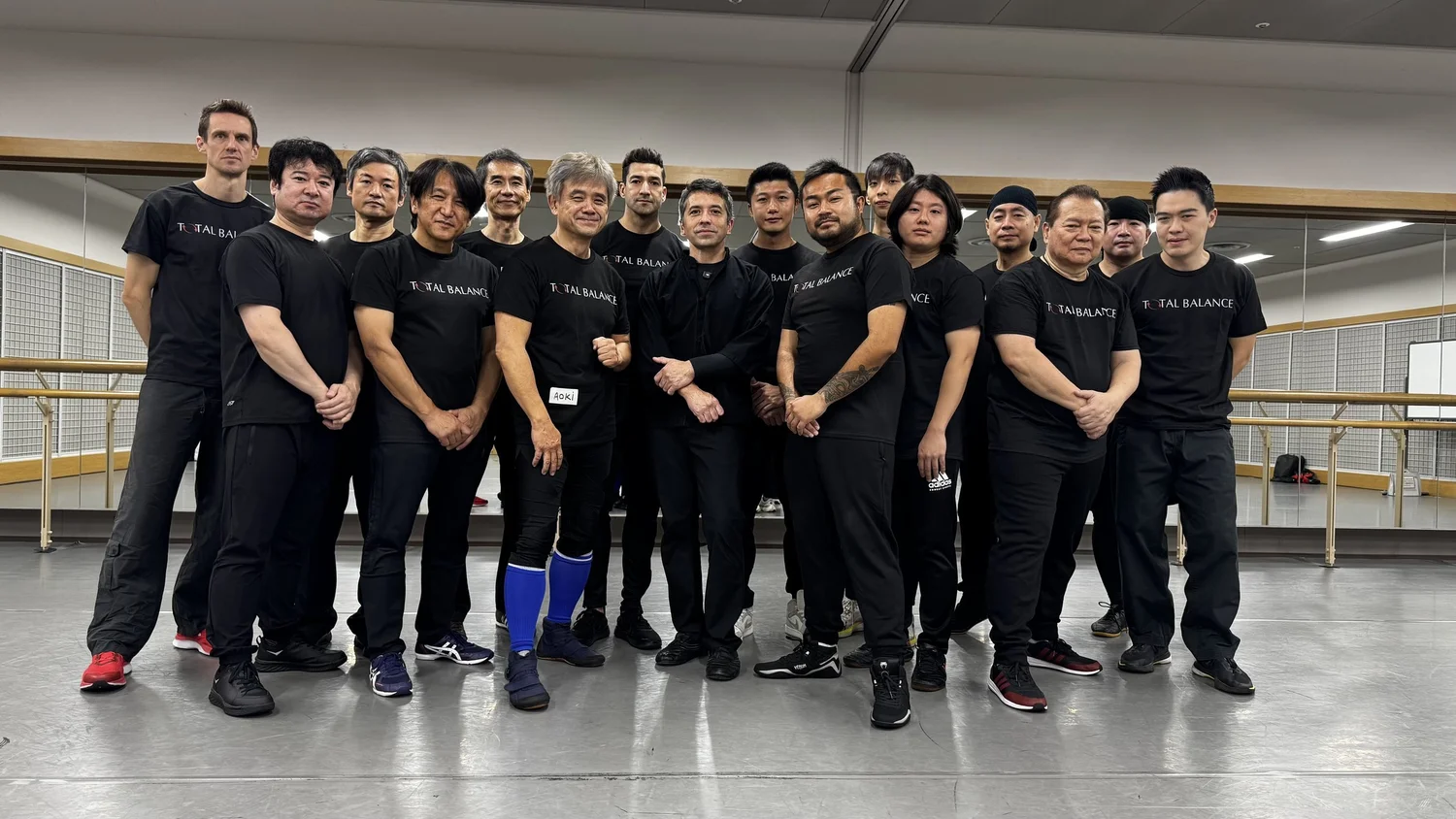
Jerry Poteet was a direct student of Bruce Lee and one of the early practitioners of Jeet Kune Do. He began training with Bruce Lee in the late 1960s in Los Angeles and was part of the small group of students who experienced Lee's personal approach to the art. Poteet later dedicated his life to preserving and teaching Jeet Kune Do as it was originally transmitted by Bruce Lee.

Known for maintaining the simplicity and efficiency that defined Lee's teachings, Poteet taught many students privately and conducted seminars throughout the United States and internationally. He also served as the primary martial arts trainer for actor Jason Scott Lee in preparation for the lead role in the film Dragon: The Bruce Lee Story.

Through his teaching, Poteet helped carry forward the legacy of Bruce Lee and the art of Jeet Kune Do to future generations.

Vern Rochon

Vern Rochon has been training in and teaching martial arts since 1972. He began his training in Goju-Ryu karate under Sensei Kerry Fournet before continuing his studies in a modified system developed by Sensei Ernie Fournet, which incorporated close-quarters combat and weapons training. During this time, Rochon and the Fournet brothers also served in the New Iberia Police Department in Louisiana and were certified instructors through the Justice System Training Association's Police Self-Defense Instructor program.

After moving to Los Angeles in 1982, Rochon began training at the Filipino Kali Academy under Guro Dan Inosanto, studying Filipino Kali and Jeet Kune Do. In 1984, he was introduced to Jerry Poteet, a direct student of Bruce Lee. Rochon trained privately with Poteet for many years and became one of his early certified instructors, eventually achieving the rank of Senior Instructor.

Rochon later taught Jeet Kune Do both commercially and privately, assisted in instructional materials and publications on the art, and continued representing the teachings of Jerry Poteet.

Training

Private and small-group.

Training is structured to emphasize efficiency, precision, and practical application. Classes are intentionally small to ensure personal attention and technical development.

Private lessons provide focused, one-on-one training in the principles and methods of Jeet Kune Do. Each session is 60 minutes and tailored to your individual skill level, goals, and training needs. All levels are welcome.

Inquire about training

Contact

Inquire about training.

Fill out the form, or call or text. You will hear back promptly to set up a first session.